
Weather Insights
Turning real-time weather data into smarter decisions for your devices and systems.
Projects
Real-world solutions powered by weather data.


Rain Sensors
Analyzing rain impact on sensor accuracy.


Snow Detection
Tracking snow effects on vehicle performance.


Fog Analysis
Measuring fog’s impact on sensor reliability.
Consulting
Tailored advice for weather challenges.
→
→
→
→
Who We Are
Prof. Horia Hangan, PhD, PEng
Founder & Principal Researcher
Canada Research Chair in Adaptive Aerodynamics
[Portrait photo, Prof. Horia Hangan]
Caption: Prof. Horia Hangan, Founder, Canada Research Chair in Adaptive Aerodynamics, Ontario Tech University
Prof. Horia Hangan is one of the world's foremost authorities in wind engineering and experimental fluid mechanics. A Canada Research Chair (Tier 1) in Adaptive Aerodynamics at Ontario Tech University and Adjunct Professor at Western University, his career spans over three decades of pioneering research at the intersection of atmospheric science and structural engineering.
Prof. Hangan's most celebrated contribution to the field is the conception and development of the WindEEE Dome, the Wind Engineering, Energy and Environment Dome at Western University. The WindEEE Dome is the world's first hexagonal wind testing chamber capable of simulating three-dimensional, non-stationary, and non-Gaussian wind flows, including tornadoes, downbursts, and complex terrain-driven winds that conventional wind tunnels cannot reproduce. The project, supported by the Canada Foundation for Innovation and provincial funding, redefined what experimental wind research could achieve.
At Weather-Adapt, Prof. Hangan brings this depth of expertise to the practical challenge of understanding and predicting how adverse weather conditions affect modern sensing and transportation technologies.
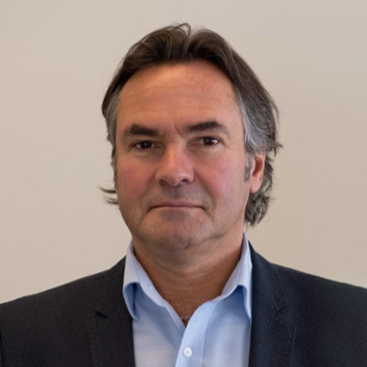
Dr. Martin Agelin-Chaab, PhD
Professor & Director, AERO Lab
Department of Mechanical and Manufacturing Engineering, Ontario Tech University
Dr. Martin Agelin-Chaab is a Professor of Mechanical Engineering at Ontario Tech University and Director of the AERO Lab, a research environment focused on advanced aerodynamic and thermofluid systems. With a PhD and MSc in Mechanical Engineering from the University of Manitoba, his expertise spans thermofluid dynamics, bluff body aerodynamics, automotive aerodynamics, and wind tunnel testing.
A recognized leader in fluid mechanics and experimental aerodynamics, Dr. Agelin-Chaab has previously served as Chair of the Fluid Mechanics Engineering Technical Committee of the Canadian Society for Mechanical Engineering (CSME) and has received multiple awards for research excellence and teaching at Ontario Tech. His contributions span both fundamental fluid mechanics research and applied automotive engineering, making him a natural bridge between laboratory science and real-world transportation challenges.
At Weather-Adapt, Dr. Agelin-Chaab plays a central role in the research and development of weather testing methodologies for autonomous vehicle sensors, with a particular focus on understanding how rain, snow, and soiling affect camera and LiDAR performance. His leadership in wind tunnel-based sensor testing and aerodynamic flow analysis underpins some of the team's most impactful and industry-facing work.
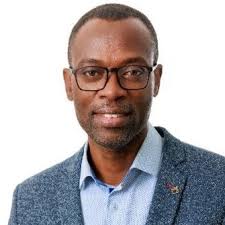
Mohammad Sadegh Moradi Ghareghani
PhD Researcher, Adverse Weather & Autonomous Transportation
Ontario Tech University, Mechanical Engineering
Mohammad Sadegh brings a rare combination of aerodynamic expertise and autonomous systems research to the Weather-Adapt team. His doctoral research sits at the intersection of two urgent fields: extreme weather science and the future of autonomous mobility. Sadegh's work focuses on understanding how adverse weather conditions, particularly snow, rain, and fog, affect the behavior, perception systems, and operational safety of autonomous vehicles (AVs). His research encompasses both experimental testing in controlled climatic environments and advanced computational fluid dynamics (CFD) simulations to model how precipitation interacts with vehicle surfaces and LiDAR sensor arrays.
A key focus of his PhD is developing predictive models for snow accretion on autonomous vehicles, work with direct implications for the reliability of Advanced Driver-Assistance Systems (ADAS) in Canadian and northern climates. His research has been published in peer-reviewed journals and contributes directly to Weather-Adapt's mission of making autonomous transportation safer in real-world weather conditions.
With expertise in turbulence modeling, CFD simulation (FLUENT, LES), and wind engineering, Sadegh represents the next generation of researchers who are building the scientific foundation for weather-resilient mobility.
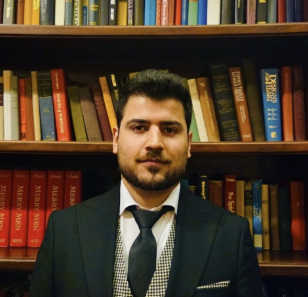
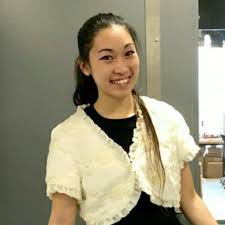
Wing Yi Pao, PhD
Researcher, ADAS Sensor Performance & Adverse Weather Testing
Ontario Tech University, Automotive Engineering
Wing Yi Pao is a researcher whose work sits at the cutting edge of autonomous vehicle safety, specifically, how cameras and LiDAR sensors behave when the weather refuses to cooperate. Holding a PhD in Automotive Engineering from Ontario Tech University, she has built a substantial research portfolio of over 29 publications and 160+ citations focused on how precipitation, rain, snow, and soiling, degrades the perception systems that autonomous and semi-autonomous vehicles depend on.
Her doctoral research produced a series of landmark contributions to the field: from developing wind tunnel methodologies for realistic rain simulation and sensor testing, to establishing predictive models for LiDAR visibility under driving-in-rain conditions, to investigating how surface material properties (hydrophilic vs. hydrophobic lens coatings) affect camera image quality. Her 2024 systematic review, Evaluating Weather Impact on Vehicles, has become a key reference in the ADAS testing community, accumulating 17 citations within its first year of publication.
Wing Yi's work combines experimental ingenuity with engineering precision, translating complex atmospheric interactions into measurable, actionable data that vehicle developers and sensor manufacturers can use. At Weather-Adapt, she represents both the scientific depth and the practical focus that define the team's approach to making autonomous transportation safer in real-world Canadian and northern climates.
Get in touch
Questions about weather impacts? Reach out anytime.

